
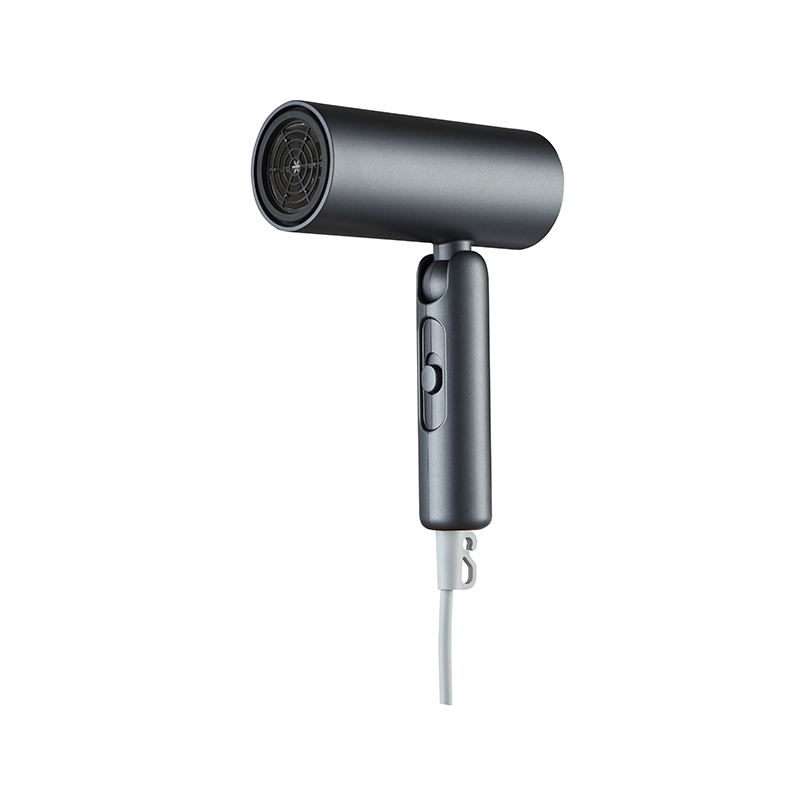

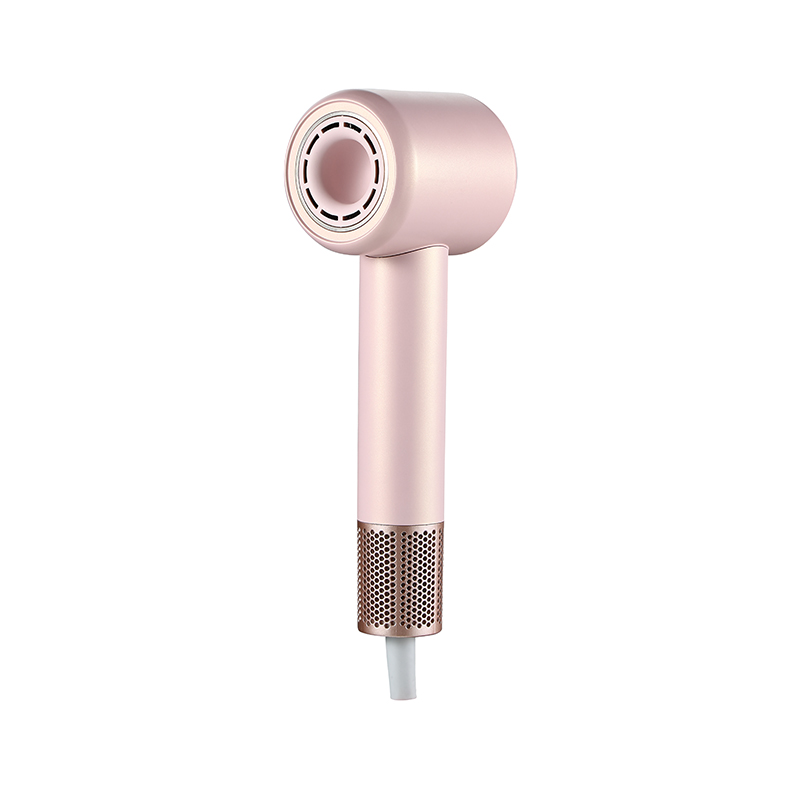
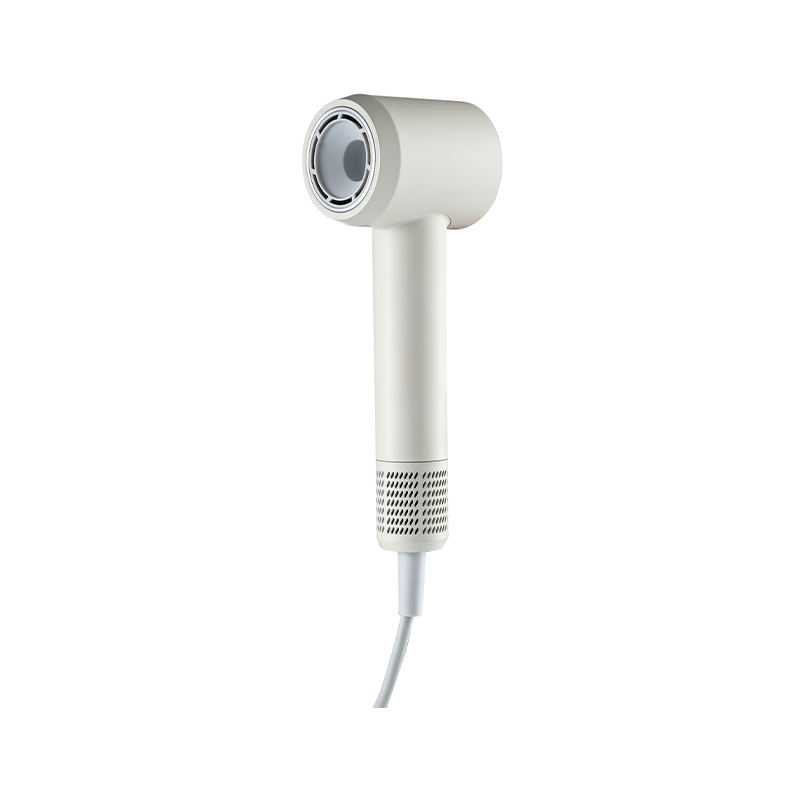


How can the internal wiring layout of a folding hair dryer be designed to avoid the risk of short circuits when folded?
Release Time : 2026-01-22
Folding hair dryers are popular for their portability, but their internal wiring layout requires special design at the folding mechanism to avoid short circuits during folding. This design necessitates comprehensive consideration from multiple dimensions, including wiring routing, insulation material selection, structural reinforcement, folding angle limitations, dynamic protection mechanisms, modular design, and rigorous testing and verification, to ensure the product remains safe and reliable even with frequent folding.
Wiring routing is fundamental to avoiding short circuits. The internal wiring of a folding hair dryer must avoid frequently moving areas of the folding mechanism, especially at hinges or pivot points. During design, the wiring should be arranged along a fixed path within the casing, using an arc or loop to avoid direct friction or stretching with the folding components. For example, after entering from the bottom of the handle, the power cord can extend along the inner edge of the casing to the motor and heating element area, reducing the impact of dynamic stress during folding on the wiring.
The selection of insulation materials is crucial. Wiring in folding areas requires high-strength, wear-resistant insulating sleeves, such as silicone or heat-shrink tubing, to enhance the wiring's tensile and bending resistance. Meanwhile, insulating gaskets or tape should be added to the contact points between the wiring and metal components to prevent damage to the insulation layer due to metal-to-metal friction. Furthermore, wiring connections should employ welding or crimping processes to ensure a firm and secure connection, preventing poor contact or short circuits caused by folding vibrations.
Structural reinforcement design can effectively distribute folding stress. At the folding mechanism, reinforcing ribs or support structures can be added inside the housing to distribute mechanical stress throughout the entire housing, rather than concentrating it at the wiring connection points. For example, a ring-shaped support frame can be designed around the hinge to fix the wiring and reduce its bending radius, thereby reducing the risk of breakage due to excessive bending. Simultaneously, the housing material for the folding area should be made of high-toughness engineering plastics, such as ABS or PC, to enhance impact resistance.
Folding angle limitation is crucial to preventing wiring overload. Mechanical limits or electronic sensors can limit the maximum folding angle of the hair dryer to prevent damage to the wiring due to excessive bending. For example, a physical stop can be installed at the hinge to ensure the handle can only fold within a safe angle range; or a built-in angle sensor can automatically cut off the power and prompt the user to adjust the posture when the folding angle approaches its limit. This design effectively prevents the wiring from experiencing excessive stress under extreme folding conditions.
A dynamic protection mechanism monitors the wiring status in real time. Some high-end folding hair dryers employ an intelligent monitoring system that uses built-in sensors to detect changes in wiring temperature, current, and resistance in real time. When an anomaly is detected, the system immediately reduces power or cuts off the power supply to prevent short circuits caused by wiring aging or damage. For example, if a tiny crack appears in the wiring due to frequent folding, the sensor can detect an increase in resistance and trigger the protection mechanism to ensure user safety.
Modular design facilitates wiring maintenance and replacement. The internal wiring of the folding hair dryer can be designed as independent modules, secured within the housing by clips or slots. When the wiring ages or becomes damaged due to long-term use, users can easily disassemble and replace the module without replacing the entire hair dryer. This design not only extends product lifespan but also reduces maintenance costs and improves the user experience.
Rigorous testing and verification are the final hurdle to ensure design reliability. During product development, folding hair dryers undergo fatigue testing simulating real-world usage scenarios, such as thousands of consecutive folds, to verify the durability of the wiring layout. In addition, high temperature, high humidity, and vibration tests are required to ensure that the circuitry maintains its insulation performance under extreme conditions. Only products that pass these rigorous tests can enter the market and provide users with a safe and reliable air-blowing experience.