



How much does the folding mechanism of a folding hair dryer affect the layout of key internal components such as the motor?
Release Time : 2026-04-09
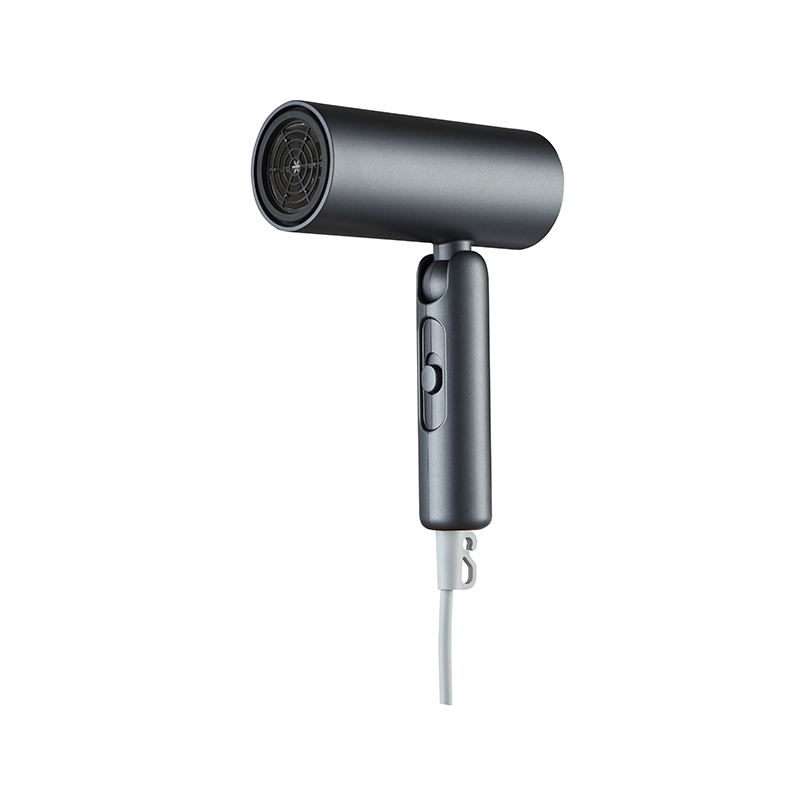
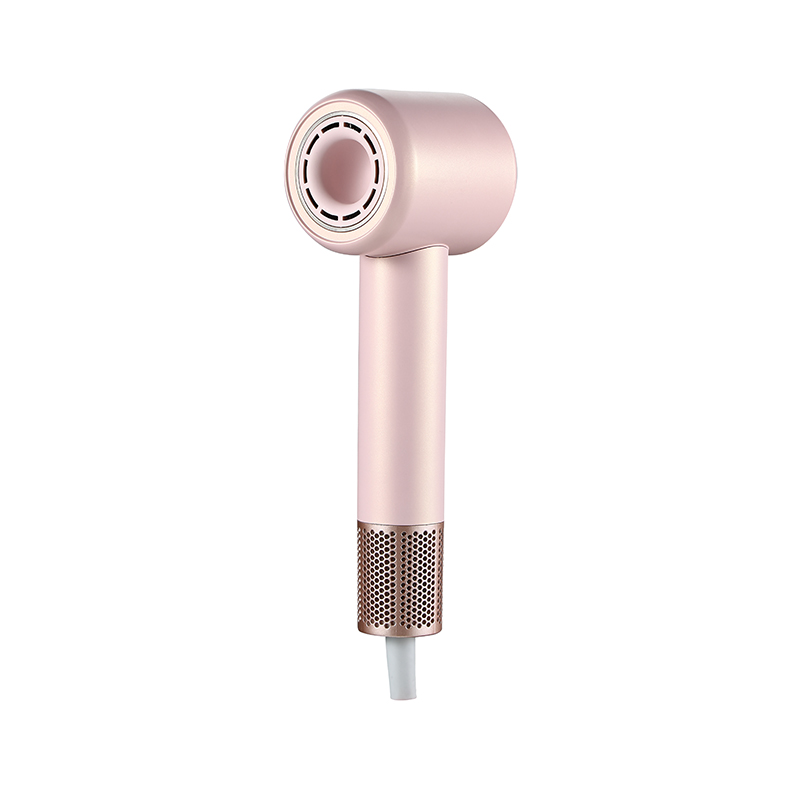
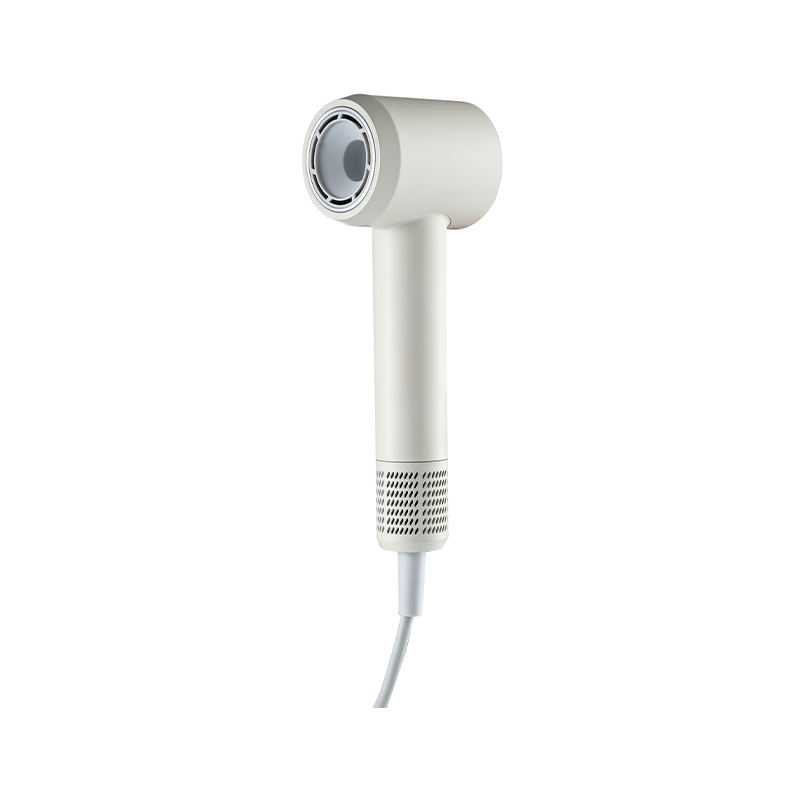
The folding mechanism of a folding hair dryer has a profound impact on the layout of key internal components such as the motor. This design not only changes the traditional structure of hair dryers but also seeks a new balance between functionality and user experience. The core of the folding mechanism lies in the retraction and unfolding of the body through hinges or flexible connections. This process requires the internal motor, air duct, circuit board, and other components to dynamically adapt within a limited space. As the power source of the hair dryer, the motor's location directly affects airflow efficiency and noise control. Traditional hair dryers often place the motor at the bottom of the handle, utilizing gravity and handle length to optimize the airflow. Folding designs, however, require a redesign of the motor's position to avoid interference with other components during folding. For example, some high-end folding hair dryers move the motor to the top of the body, reducing energy loss by shortening the airflow distance and improving airflow concentration through a straight airflow design.
Air duct layout is another crucial aspect influenced by the folding mechanism. Traditional air ducts are often L-shaped or cylindrical, relying on the body length to accelerate airflow. However, because the body of a folding hair dryer is compressible, the air duct structure needs to be reconstructed through fluid dynamics optimization. In the folded state, the airflow duct must maintain basic continuity to avoid airflow turbulence caused by gaps at the joints. When unfolded, it must quickly restore its efficient airflow shape to ensure no reduction in airflow force. During this process, the choice of airflow duct material is particularly important; flexible yet high-temperature resistant materials are preferred, as they can adapt to folding deformation and withstand the heat generated by the motor during prolonged operation. Furthermore, the coordinated design of the airflow duct, motor, and heating element requires greater precision to prevent localized overheating or airflow backflow from affecting performance.
The layout of the circuit board also presents challenges. The folding mechanism requires the circuit board to have higher flexibility and fatigue resistance to cope with the stress changes caused by frequent opening and closing. Traditional rigid circuit boards are prone to breakage at folds, therefore flexible circuit boards or modular designs have become mainstream. By dividing the circuit into multiple independent modules and using flexible connectors at the joints, both signal transmission stability and overall structural durability are ensured. Simultaneously, the heat dissipation design of the circuit board must be matched with the folding mechanism to prevent heat accumulation due to space compression, which could affect the lifespan of electronic components.
The layout of the battery and power cord must balance portability and safety. Folding hair dryers are primarily designed for travel, making battery capacity and charging efficiency key user concerns. To save space, batteries are often designed to be flat or detachable, embedded in the handle or bottom of the device. The power cord is secured with clips or magnetic closures, retracting into the body when folded and automatically releasing when unfolded, preventing tangling. This design not only improves ease of use but also reduces safety hazards caused by exposed cords.
The folding mechanism also significantly impacts the layout of the heating wires. As the core component generating hot air, the position and power distribution of the heating wires directly affect drying efficiency and hair care effects. Folding hair dryers need to rationally arrange the heating wires within a limited space to ensure even heat distribution and avoid localized overheating that could damage hair. Some products employ dual-layer heating wires or zoned temperature control technology to achieve precise temperature adjustment, meeting the need for rapid drying while protecting hair health.
Furthermore, the folding mechanism also affects the overall weight distribution of the hair dryer. To improve grip comfort, designers must balance the positions of heavy components such as the motor and battery to prevent a shift in the center of gravity due to folding. By optimizing the internal structure and concentrating the weight in the middle or bottom of the handle, arm fatigue during prolonged use can be effectively reduced.
Finally, the folding mechanism places higher demands on the durability and ease of maintenance of the hair dryer. Frequent opening and closing can lead to wear and tear at the joints, thus requiring the use of high-strength materials and precision machining processes to improve structural stability. At the same time, the modular design of internal components allows users to easily replace or clean them themselves, extending the product's lifespan.